Resources
Field notes on land decisions
Plain-language guides to the choices a landowner actually faces: cash rent and land value, water and flood risk, evaluating a solar or wind lease, conservation programs, and buying or inheriting ground. Grounded in the federal data behind a Scout report.
October 13, 2026
How Big Is an Acre? The Plain-Language Answer (and Why Size Isn't the Whole Story)
A plain-language breakdown of exactly how big an acre is (43,560 square feet, with football field and tennis court comparisons), followed by why acreage size alone doesn't determine what a parcel is worth.
Read →
October 5, 2026
How Many Acres in a Township: A Plain-Language Guide to the PLSS Grid
A standard township is 36 sections of 640 acres each, for 23,040 acres total, and this piece walks through that PLSS math plainly while flagging why real deeds and legal descriptions often don't match the textbook number exactly.
Read →
September 30, 2026
How Many Acres in a Section: The Plain-Language Answer for Landowners Doing Their Own Math
A section is 640 acres, one square mile under the Public Land Survey System, and this post breaks down the half, quarter, and quarter-quarter fractions landowners and heirs actually deal with on deeds, then ties that math to cash rent, USDA program payments, and solar lease offers that are all quoted per acre.
Read →
September 28, 2026
What Crops Are Grown in Indiana (and What That Tells You About Your Parcel)
A plain-language answer to what crops are grown in Indiana (corn, soybeans, wheat, hay, and pockets of melons and mint), tied to why soil and drainage drive the pattern, with concrete next steps for post-harvest soil health and cash-rent benchmarking on a reader's own parcel.
Read →
September 23, 2026
The Negotiation Gap: What a Developer's 'Comparable' Costs You If You Don't Check It
When a developer or buyer opens with a lowball comparable, most owners have no independent figure to push back with. This post walks through how to pull your own USDA NRCS soil productivity data and county cash-rent benchmarks so you're negotiating from your own number instead of theirs.
Read →
September 21, 2026
I Inherited Farmland. Should I Sell, Lease, or Hold It?
Heirs facing the sell/lease/hold decision on inherited farmland usually get their first number from the outgoing tenant or a broker instead of independent federal data; this post walks through pulling USDA NRCS soil ratings, USDA NASS cash-rent benchmarks, and FEMA/USGS flood data before any negotiation, using Agriterra Scout's free parcel analysis and Decision Report.
Read →
September 16, 2026
Before You Buy Farmland This Fall, Ask for the Yield History
Before buying farmland this fall, don't take a broker's word on what the ground 'could' produce. Learn how to request real yield history and verify it against USDA NRCS and NASS data before you sign.
Read →
September 14, 2026
Is Your County's Average Cash Rent Based on a Wet Year or a Dry One?
County cash-rent averages from USDA NASS often blend a wet year and a dry year into one misleading figure, so this post walks landowners through the exact question to ask before signing a fall lease and how Agriterra Scout's Decision Report benchmarks the real data for their parcel.
Read →
September 9, 2026
How to Benchmark Cash Rent for Your County This Harvest Season
A practical guide to benchmarking cash rent right after harvest, using USDA NASS county data alongside a parcel's own soil and productivity numbers instead of relying on a broker's word.
Read →
September 7, 2026
How to Benchmark Your County's Cash Rent Before You Sign This Fall's Lease
A practical guide to pulling USDA NASS cash rent benchmarks before renewing or negotiating a fall lease, and why pairing that number with a parcel's soil, water, and productivity data (via Agriterra Scout's Decision Report) beats accepting a broker or tenant's quoted figure at face value.
Read →
September 2, 2026
Can You Still Farm or Graze Land Under a Solar or Wind Lease?
A plain-language walkthrough of the question most landowners never ask before signing a solar or wind lease: whether the developer's per-acre number already assumes idle land, or whether grazing, haying, or row crops between the rows should be paying on top of it.
Read →
August 31, 2026
How to Benchmark Your Soil Productivity Score Against Your County (Before You Take an Offer)
A USDA NRCS soil productivity score only means something next to a county baseline; this post shows landowners how to get that comparison for free before responding to a lease or purchase offer, and when the $89 Decision Report is worth it.
Read →
August 19, 2026
What to Check Before You Close on Land: Title, Easements, Drainage Liens, and Mineral Rights
A plain-language guide to the four diligence gaps buyers, heirs, and investors most often skip before closing on land: title issues, conservation easements, drainage liens, and severed mineral rights, with a clear case for checking the parcel yourself before signing.
Read →
August 17, 2026
Why the County Cash Rent Average Doesn't Apply to Your Parcel
County-level cash rent averages blend wet, rocky, and full-tillable ground into one meaningless number; this post shows landowners how to check their parcel's actual drainage class and tillable-acre percentage instead of anchoring to the county blend.
Read →
August 12, 2026
What Should I Charge for a Solar or Wind Lease? Not Whatever Dave Got.
Landowners negotiating solar and wind leases this growing season are anchoring on secondhand neighbor numbers instead of their own parcel's sun exposure, soil rating, and flood risk data, a mistake developers are happy to let stand. This piece breaks down what actually drives lease value on a specific parcel and how to pull real federal data before any lease conversation.
Read →
August 10, 2026
"That's Market Rate": What a Solar or Wind Developer Isn't Telling You About Your Comps
When a solar or wind developer calls an offer 'market rate,' landowners should ask what comps back that claim up, since identical acreage in the same county can swing 30% in value based on drainage and bedrock depth alone. This post explains the soil science in plain terms and shows how to pull USDA NRCS data on both your parcel and the developer's comps before signing.
Read →
August 5, 2026
I Inherited Farmland. What Do I Do With It Now?
Heirs to farmland face a tax and land-use puzzle before the first bill even arrives; this post explains how to use Agriterra Scout's free parcel analysis and Decision Report to see soil, flood risk, and USDA program eligibility before deciding whether to keep, lease, enroll, or sell.
Read →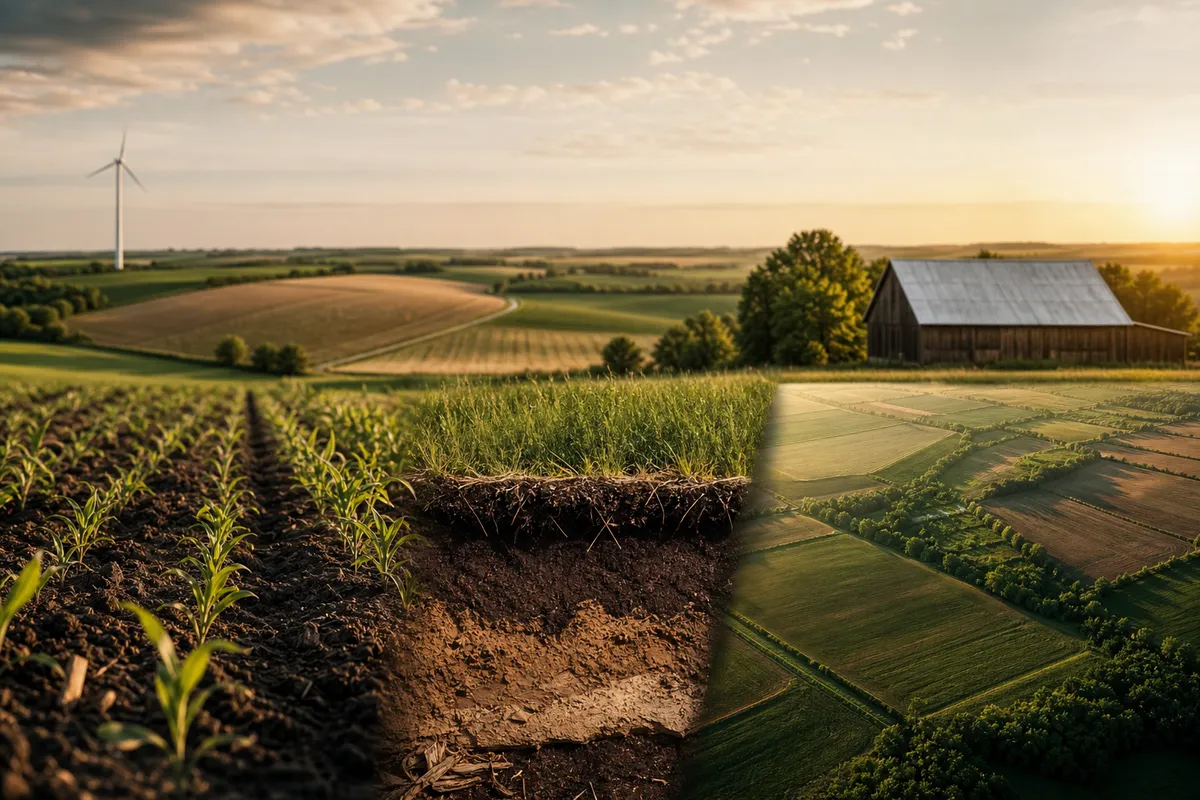
August 3, 2026
How to Read Your County's USDA Soil Survey in Plain English (Before You Sign a Lease or Set a Price)
This post translates the USDA NRCS soil survey into plain English, explaining what drainage class and productivity rating actually mean for a parcel's value, and shows landowners, buyers, heirs, and lenders how to use those two data points as leverage in a rent negotiation or purchase decision instead of accepting someone else's number.
Read →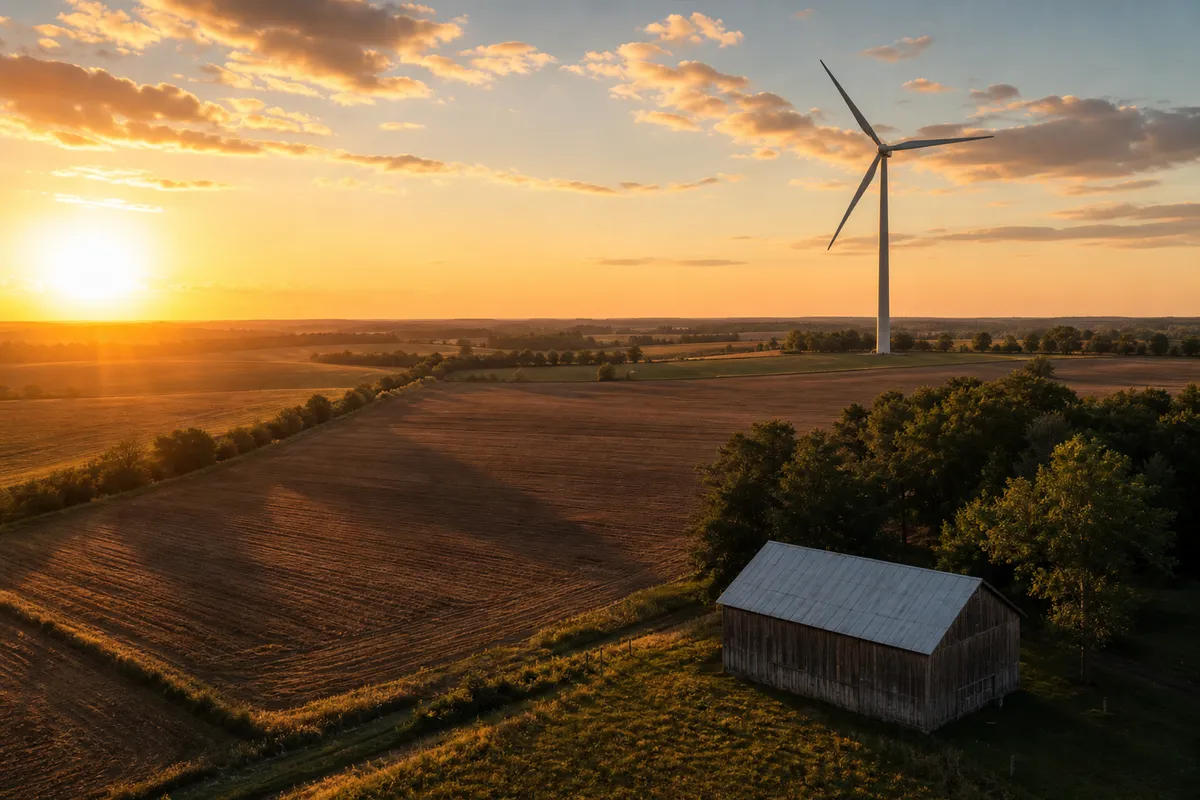
July 29, 2026
How to Find Out What Your Neighbors Signed for Their Solar or Wind Lease
A plain-language guide for landowners who've received a solar or wind lease offer this summer, explaining why the first offer favors the developer and how to pull real, federally-sourced comps on your own parcel before countering.
Read →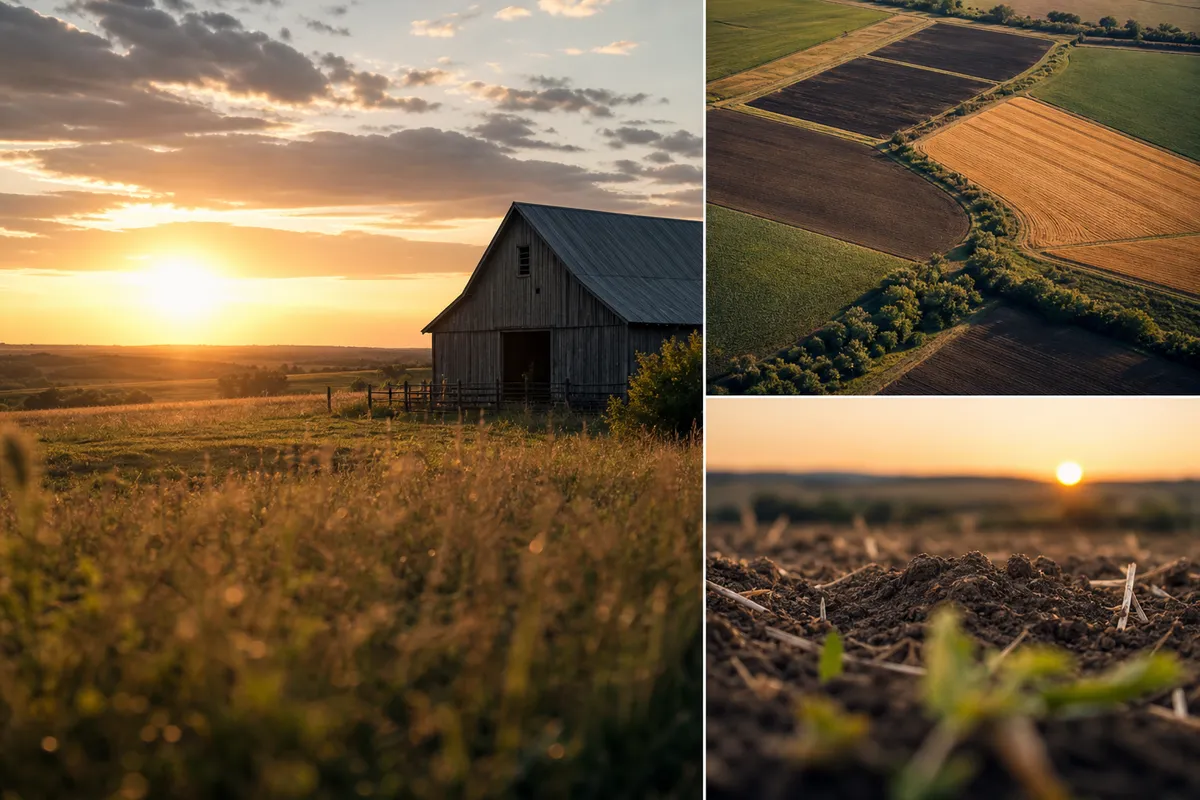
July 27, 2026
How to Read Your USDA Soil Productivity Score (Before Someone Else Uses It Against You)
This post explains what a USDA soil productivity rating actually measures, why lenders and crop insurers already use it to price land, and how landowners can pull the same federal data through Agriterra Scout before signing a lease, sale, or loan.
Read →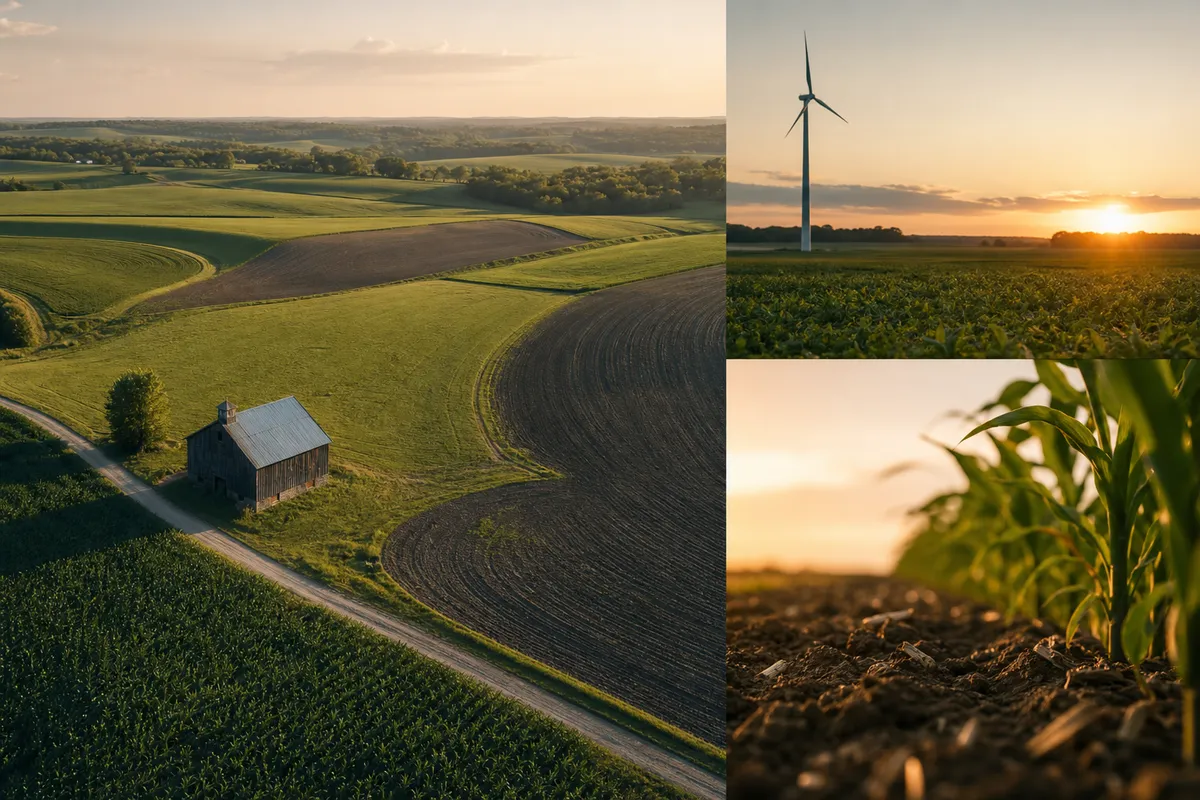
July 23, 2026
AgriTerra Joins AgriNovus Indiana's 2026 Velocity Cohort
AgriTerra has been selected for AgriNovus Indiana's 2026 Velocity cohort — one of twelve startups in the state's agbioscience accelerator, and one of four in its Farmer-Focused Innovation track. What the program is, and why it fits what we're building.
Read →
July 22, 2026
Your Soil Already Has a Rating. Here's How to Read It.
Most owners can quote their county's per-acre average but have never opened the free USDA soil survey that rates their own ground. That rating shapes yield, cash rent, and sale price more than the average ever will — here's how to read it.
Read →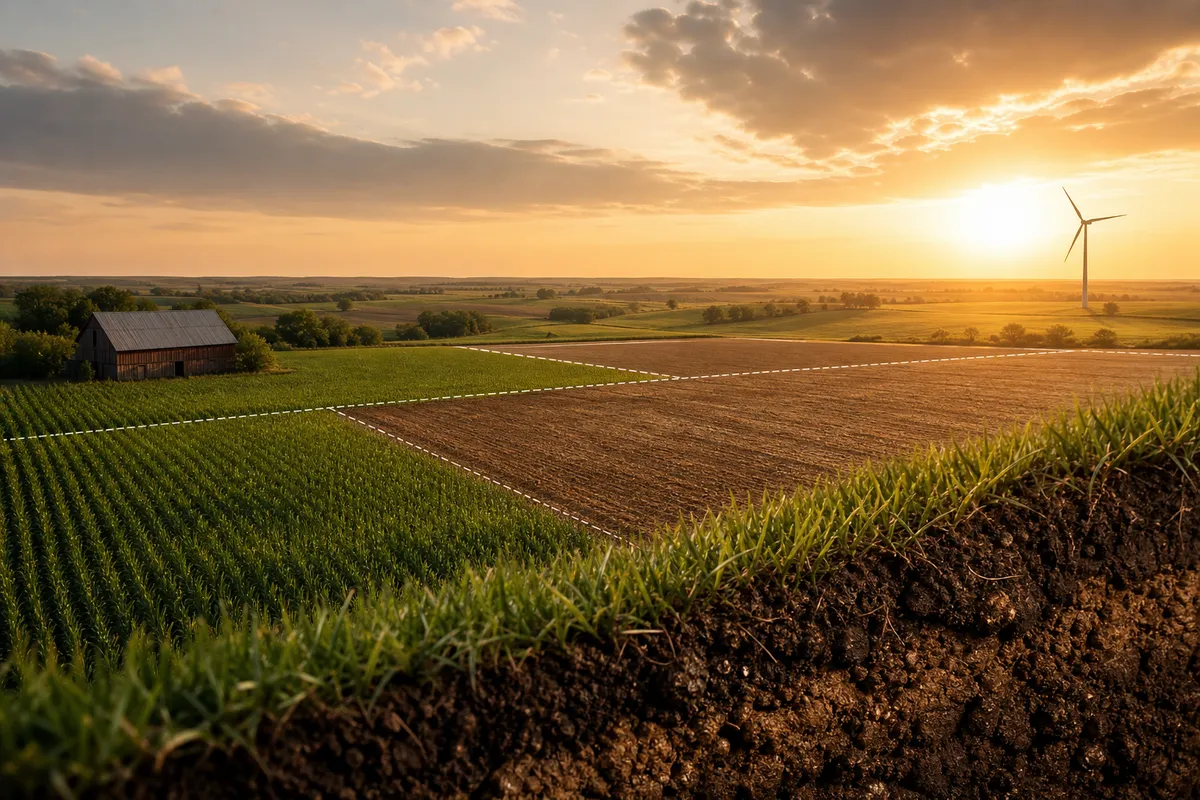
July 20, 2026
Your County's Cash-Rent Number Isn't Your Number
Most landowners can recite their county's cash-rent average but have never checked the USDA NRCS soil data behind their own parcel, leaving them to negotiate mid-summer lease renewals blind. This piece breaks down why that gap matters and how an $89 Decision Report (or the free parcel analysis) closes it.
Read →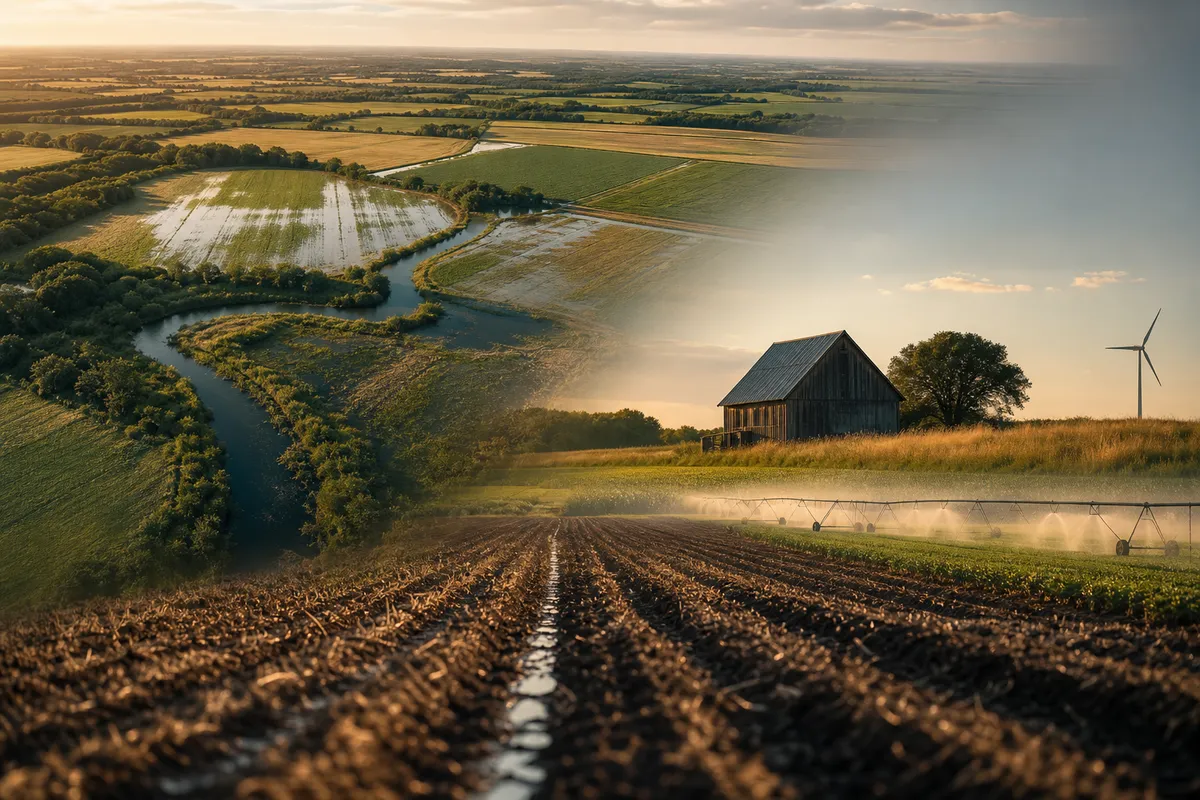
July 13, 2026
What Water Does to Farmland Value (Drainage, Flooding, and Irrigation)
Whether your land drains, floods, or holds moisture through a dry stretch moves its value as much as the soil underneath — and most of it is public record. A plain-language look at the drainage, flood, and irrigation data that belong in your land's price.
Read →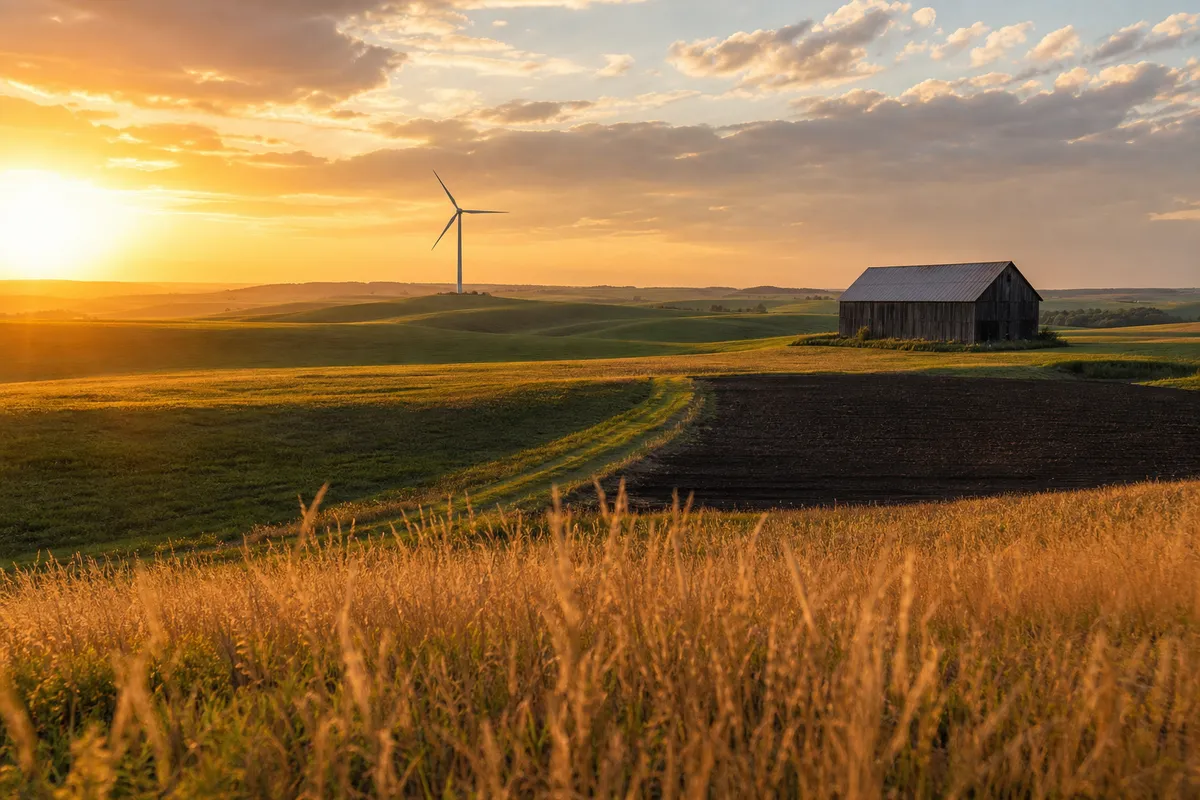
July 6, 2026
Solar and Wind Lease Royalty Rates in Your County: How to Know If a Developer's Offer Is Actually Competitive Before You Sign Away 20+ Years of Income
Solar and wind lease rates are driven by public federal data, NREL irradiance, wind speed, USDA NASS cash-rent benchmarks, and Agriterra Scout puts that data in plain language before a single counter-offer is made. This post walks landowners through what sets rates, what lease terms get overlooked, and why an $89 Decision Report is the pre-negotiation step that changes the conversation.
Read →
June 23, 2026
Detecting Late-Season Corn Leaf Diseases During R4-R5: Scouting Northern Corn Leaf Spot and Gray Leaf Spot to Protect Kernel Fill
At R4, the kernel fill race is already underway. Every functional leaf in the upper canopy — ear leaf and above — is contributing directly to the photosynthate supply that determines final kernel…
Read →
June 20, 2026
What Your Farmland Is Actually Worth (Beyond the Per-Acre Guess)
The 'going rate per acre' is a starting point, not an answer. Tillable ratio, soil productivity, water, and energy-lease potential move the number more than most owners expect.
Read →