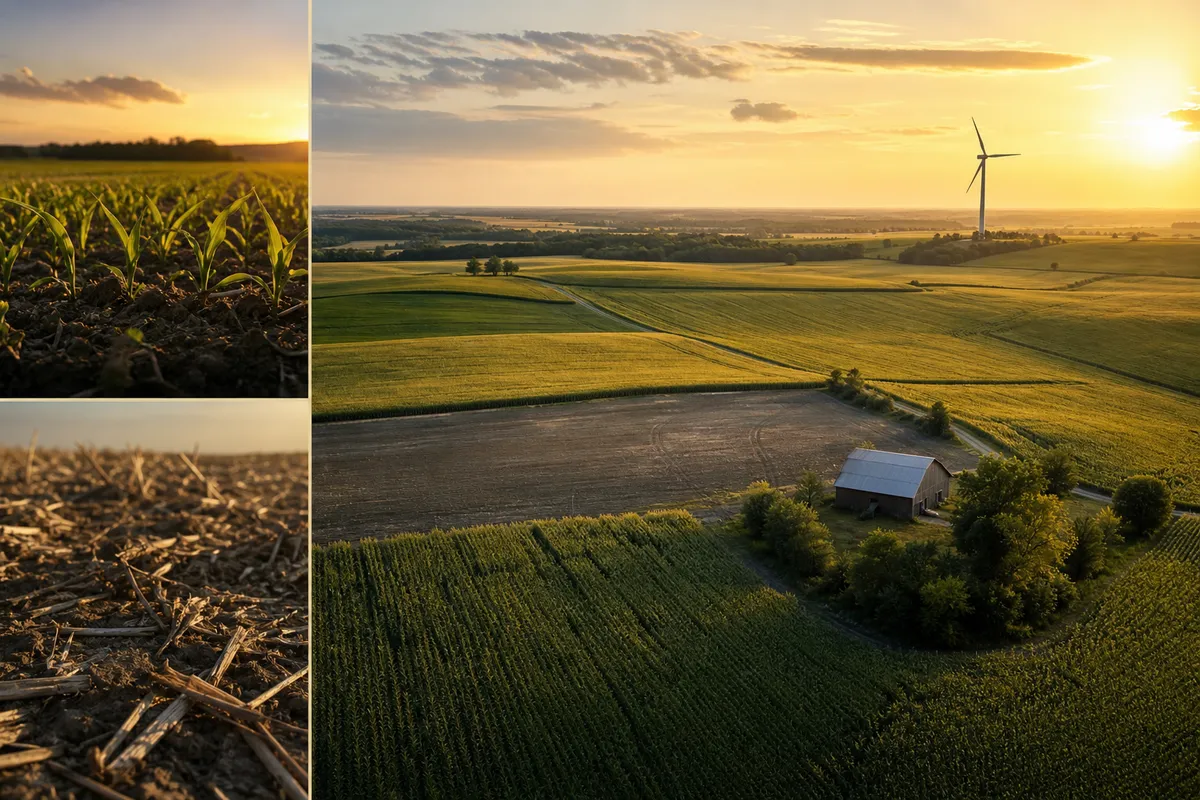
Is Your County's Average Cash Rent Based on a Wet Year or a Dry One?
County cash-rent averages from USDA NASS often blend a wet year and a dry year into one misleading figure, so this post walks landowners through the exact question to ask before signing a fall lease and how Agriterra Scout's Decision Report benchmarks the real data for their parcel.
The county average everyone quotes is a blend, not a snapshot
Here's the number that gets handed around every fall: your county's average cash rent per acre, straight from USDA NASS. A broker mentions it. A neighbor mentions it. Maybe a lease offer arrives with that figure already baked in, presented like it's simply what land in your county is worth this year.
It isn't. It's an average, and averages flatten things.
USDA NASS surveys real landowners and operators and reports what they actually paid or received. That part is legitimate: no black box, no proprietary model, just federal data collected from real leases. But depending on how it's presented to you, that average might reflect last year's numbers, a rolling five-year blend, or (less often) the current year. A county that had one brutal drought year and two strong years will show an average that doesn't match any single season, including the one you're negotiating for right now.
Why a wet year and a dry year can't share one number
Cash rent tracks with what the land actually produced, and what it produced tracks with the weather. A wet spring that delayed planting, or a dry August that clipped yields at grain fill, changes what an operator can afford to pay for the ground next season. Average two years like that together and you get a number that undersells the good year and oversells the bad one.
This matters more than it sounds like it should, because cash rent offers are sticky. Once a number gets attached to a county, it tends to get repeated for a few years running, whether or not conditions still support it. An operator who signed at the average during a strong year isn't necessarily going to volunteer that this year's conditions were rougher and the rent should move. Why would they.
That's the quiet skepticism worth having here: not that USDA NASS data is wrong, but that whoever hands you the average rarely tells you which year (or years) produced it.
The one question to ask before you sign this fall's lease
Before you agree to any cash rent number this harvest, ask the offering party directly: is this figure based on this year's growing conditions, last year's, or a multi-year blend?
If the answer is vague, that's information too. A lease offer that leans on "county average" language without specifying the year is often leaning on whichever number favors the person offering it, not the one that reflects your ground this season.
A few concrete things to check on your own:
- Was this year wet, dry, or average for your county? You know this better than anyone quoting you a number from a spreadsheet.
- Did nearby yields this year run above or below the norm? That's the real driver behind what an operator can pay.
- Is the number you're being offered older than this year's harvest? A rent quoted in early spring, before anyone knew how the season would turn out, isn't the same as a rent negotiated after the combines have already told you the story.
For a deeper walkthrough on getting your own comparison together before you sit down at the table, see how to benchmark cash rent for your county this harvest season and how to benchmark your county's cash rent before you sign this fall's lease. If you want the fuller argument for why the average itself can mislead you at the parcel level, read why the county cash rent average doesn't apply to your parcel.
How to see your own number instead of guessing at theirs
You don't have to comb through raw USDA NASS tables to figure out where your parcel actually stands. Agriterra Scout's Decision Report ($89 once, for one parcel) pulls county cash-rent benchmarking straight from USDA NASS and puts it in plain language, alongside soil, water, and value data for the same ground, so you can see how the number you've been offered compares to what the federal data actually shows for your county and this year's conditions. No guesswork about which year the average came from, and every figure labeled Measured, Modeled or Estimate: the source data, laid out so you can ask a sharper question at the negotiating table.
If you're weighing cash rent against other paths for the same acreage, like leasing for solar, enrolling in CRP, or farming it yourself, the Farm vs Solar vs CRP comparison lays those scenarios side by side using the same underlying data.
What to do with this before you sign anything
Harvest is exactly when this comparison is easiest to make, because you have real numbers in front of you: your own yield, your own input costs, and a fresh read on whether the season ran wet, dry, or normal. That's more current information than any county average can carry on its own.
Run your parcel through Agriterra Scout's Decision Report and see how your county's cash rent benchmark holds up against this year's actual conditions before you sign anything.
Frequently asked
How does USDA NASS calculate the average cash rent for a county?
USDA NASS surveys landowners and operators each year and publishes a county-level average based on actual reported leases. It's a real number, not a model, but it's a snapshot of whatever year (or years) it covers. A five-year average blends good and bad seasons into one figure that may not match current conditions.
Should I negotiate cash rent based on this year's yield or the county average?
Use both. The county average from USDA NASS is your starting reference point, but this year's actual conditions (rainfall, yield, input costs) tell you whether that average is too high or too low for the lease you're about to sign. Ask which one the offer is built on before you agree to a number.
Where can I find USDA NASS cash rent data for my county?
USDA NASS publishes county-level cash rent surveys through its QuickStats tool, but the raw tables take time to parse and don't tell you which year's conditions they reflect. Agriterra Scout's Decision Report pulls this NASS data into a plain-language benchmark for your specific parcel.
Go deeper: the reference guides
- Setting rent on farm ground What the rent number should be for your acres, and what moves it up or down.
- Cash rent by state USDA NASS county cash-rent averages for non-irrigated cropland, state by state.
- Farmland cash-rent lease agreement What a written cash-rent lease must say.
See what your acres could earn
Start with a free parcel read: soil, water, flood, and what the ground could earn farmed, rented, enrolled or leased. When a decision is worth it, the Decision Report is $89 once for one parcel, or 5 a month with Land Scout at $39 a month.
Launch Scout